 EN
EN
Understanding Photoinitiators and Their Role in UV-Curable Coatings
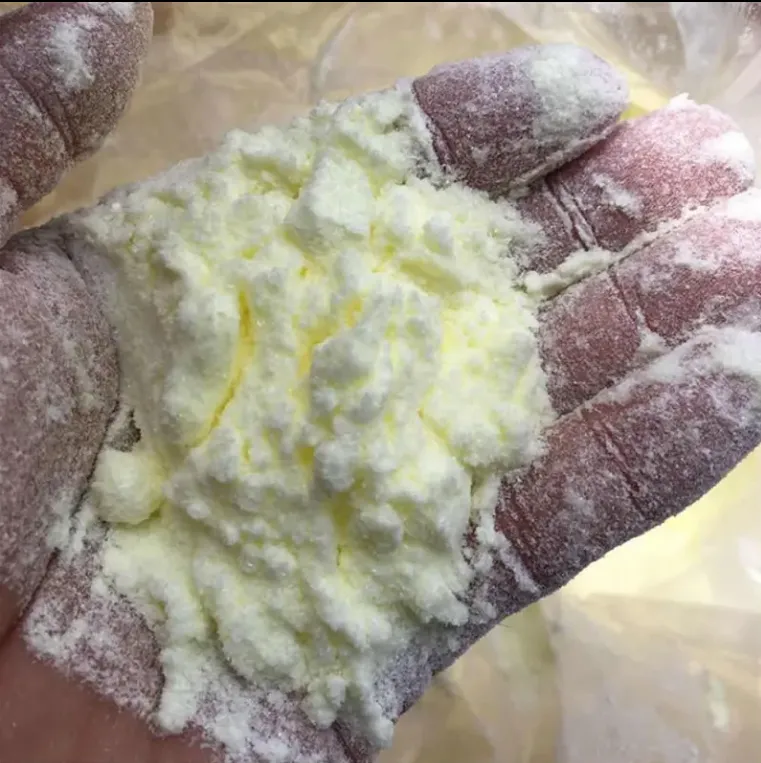
Photoinitiators are what kickstart those chemical changes that turn liquid UV coatings into strong, interconnected structures. These sensitive to light materials actually make up around 60 to 80 percent of how fast things cure in industry settings, so picking the right ones really matters when trying to streamline manufacturing processes. Looking at numbers from Yahoo Finance, the worldwide market for photoinitiators hit about $1.43 billion back in 2023. That kind of figure shows just how important these substances have become as industries push toward greener practices with their energy saving curing methods.
The Function of Photoinitiators in Photopolymerization
When exposed to UV radiation (250–420 nm), photoinitiators absorb photons and generate reactive intermediates—free radicals or cations—that initiate chain reactions between monomers and oligomers, rapidly forming polymer networks. Unlike thermal curing, this process completes in seconds and emits minimal volatile organic compounds (VOCs), supporting eco-friendly manufacturing.
Type I vs. Type II Photoinitiators: Cleavage and Hydrogen Abstraction Mechanisms
| Mechanism | Reactive Species | Light Sensitivity | Common Applications |
|---|---|---|---|
| Type I (Cleavage) | Free radicals | 300–400 nm | Matte coatings, thick films |
| Type II (Abstraction) | Radicals via co-initiator | 350–420 nm | Clear coatings, thin layers |
Type I photoinitiators, such as benzoyl derivatives, undergo direct bond cleavage under UV-A light to produce free radicals. In contrast, Type II photoinitiators like thioxanthones require a hydrogen donor (e.g., amine co-initiators) to generate radicals through energy transfer, enabling efficient curing in oxygen-rich environments.
Initiation Efficiency and Influence on Cure Onset
There are basically three things that determine how well initiation works: first, whether the photoinitiator actually absorbs the light from the UV lamps it's supposed to work with; second, getting the right amount for the coating thickness (usually somewhere between half a percent and five percent); and third, making sure it doesn't get inhibited by oxygen at the surface where the curing happens. The best Type I systems can convert over 95% of monomers in just half a second, which sounds impressive until we see those formulations turn yellow after curing. That's why many manufacturers these days are mixing both Type I and Type II photoinitiators in their LED curable coatings. This combination helps maintain good surface finish while still allowing proper penetration through thicker layers of material.
How Photoinitiators Affect the Performance of UV-Curable Coatings
Curing Speed and Degree of Crosslinking
The speed at which UV curable coatings reach complete polymerization is pretty much controlled by photoinitiators. When manufacturers use efficient Type I initiators like acylphosphine oxides, they get really fast surface curing under those UV LED lights. Some factories have actually measured initiation times down to just 0.3 seconds according to what was published in the 2025 market report on photoinitiators. But getting good crosslinking all the way through depends on making sure the initiator reacts properly with how deep the light can penetrate into the material. That's where dual cure systems come in handy these days. These systems mix both UV and heat based curing methods to overcome this problem. They manage to get around 98 percent cure depth even in materials that don't let much light through, and still keep production cycles below ten seconds most of the time.
Mechanical Properties and Substrate Adhesion
What kind of photoinitiator we choose really affects how strong the final product will be and how well different materials stick together. Type II systems work differently because they pull hydrogen atoms out during the process, creating polymer networks that are about 15 to maybe even 20 percent more flexible compared to the older Type I systems that break bonds instead. When manufacturers get the mix right, these improved formulas can boost adhesion to tricky surfaces such as polypropylene by around 40%. That means coatings stay put much better when subjected to physical forces without peeling off. The reason behind this improvement lies in the formation of stronger chemical bonds between the base material and the coating right from the start of the curing process.
Yellowing, Aging, and Residual Byproducts
Stability problems that last over time usually come down to how photoinitiators break down. Take benzophenone derivatives for instance they work well on price but tend to leave around 3% residual amines behind. This leftover stuff speeds up yellowing effects we see Δb* values going above 5 after just 500 hours under UV light. The newer options like glycidyl-based photoinitiators are making waves in the industry. They cut down yellowing by about three quarters and keep extractables below half a percent which matters a lot when manufacturing medical equipment or applying optical coatings. Most modern formulations now focus on initiators that have stabilization built right in. These materials can last way beyond a decade outdoors without needing those extra additives that sacrifice other properties for stability.
Optimizing Photoinitiator Selection and Formulation Strategies
Balancing Photoinitiator Concentration for Depth and Surface Cure
Getting uniform curing right depends on carefully managing how much photoinitiator is used. When there's too much of it, the surface cures quickly but doesn't let enough UV light through, which can leave deeper layers improperly cured. According to what many manufacturers have found, keeping photoinitiator concentrations between 2% and 4% cuts down cure times around 15%, yet still achieves at least 90% crosslink density even in coatings as thick as 200 micrometers. The situation changes when dealing with really thick films over 500 micrometers though. In these cases, most experts suggest using gradient systems with two different types of photoinitiators so both the surface and inner parts get activated properly at the same time.
Co-Initiators and Synergistic Systems to Enhance Reactivity
When amine co-initiators are added to Type II systems, they actually increase the amount of free radicals formed somewhere around 30 to 40 percent. What does this mean for manufacturers? They can cut down on how much primary photoinitiator they need to use, roughly between 1.2 and 1.8 times less, yet still maintain the same cure speed. The benefits here are pretty significant too. Less yellowing occurs over time, and products tend to last longer on shelves before degrading. Take inkjet applications as a case study. When companies combine dimethylaminoethyl methacrylate (DMAEMA) with benzophenone, something interesting happens. The pot life gets extended by about twenty whole minutes, which gives workers more working time during production runs. Even better, the adhesion properties stay strong throughout the process, so there's no compromise on quality despite these adjustments.
Matching Photoinitiators to Substrates and Application Requirements
Around 60% of the UV curable coatings market belongs to free radical photoinitiators according to recent industry reports from Towards Chem and Materials (2024). These materials work well across many different resin systems which explains their popularity. But what really matters is how the material being coated responds to light. For example, when working with polycarbonate or glass surfaces, technicians typically reach for 365 nm sensitive initiators such as HMPP (that's 2-hydroxy-2-methylpropiophenone for those keeping score at home). On the flip side, when dealing with colored metal coatings, shorter wavelength options like iodonium salts at around 254 nm tend to give better results. Getting this right makes a real difference in practice. Industrial coating operations can cut down on energy usage by roughly a quarter while auto manufacturers report that properly matched systems boost scratch resistance in clear coats by about three times compared to mismatched combinations.
FAQ
What is the main role of photoinitiators in UV-curable coatings?
Photoinitiators initiate the chemical changes that convert liquid UV coatings into solid structures by absorbing photons and generating reactive intermediates, which rapidly form polymer networks.
What's the difference between Type I and Type II photoinitiators?
Type I photoinitiators undergo bond cleavage to produce free radicals, whereas Type II photoinitiators require a co-initiator to generate radicals through energy transfer.
How do photoinitiators affect the curing speed of coatings?
The curing speed is controlled by the efficiency of the photoinitiators. Type I initiators can achieve fast curing, and dual cure systems can overcome depth penetration issues for thicker materials.
What is the impact of photoinitiators on the mechanical properties of UV-curable coatings?
Type II systems offer more flexibility and better adhesion to substrates than Type I systems, which improves the durability and adherence of coatings to surfaces.
How can the formulation of photoinitiators be optimized?
Optimal formulations balance concentration for adequate surface and depth curing, utilize co-initiators to enhance reactivity, and match photoinitiators to substrates for optimal performance.
Table of Contents
- Understanding Photoinitiators and Their Role in UV-Curable Coatings
- How Photoinitiators Affect the Performance of UV-Curable Coatings
- Optimizing Photoinitiator Selection and Formulation Strategies
-
FAQ
- What is the main role of photoinitiators in UV-curable coatings?
- What's the difference between Type I and Type II photoinitiators?
- How do photoinitiators affect the curing speed of coatings?
- What is the impact of photoinitiators on the mechanical properties of UV-curable coatings?
- How can the formulation of photoinitiators be optimized?