
 EN
EN
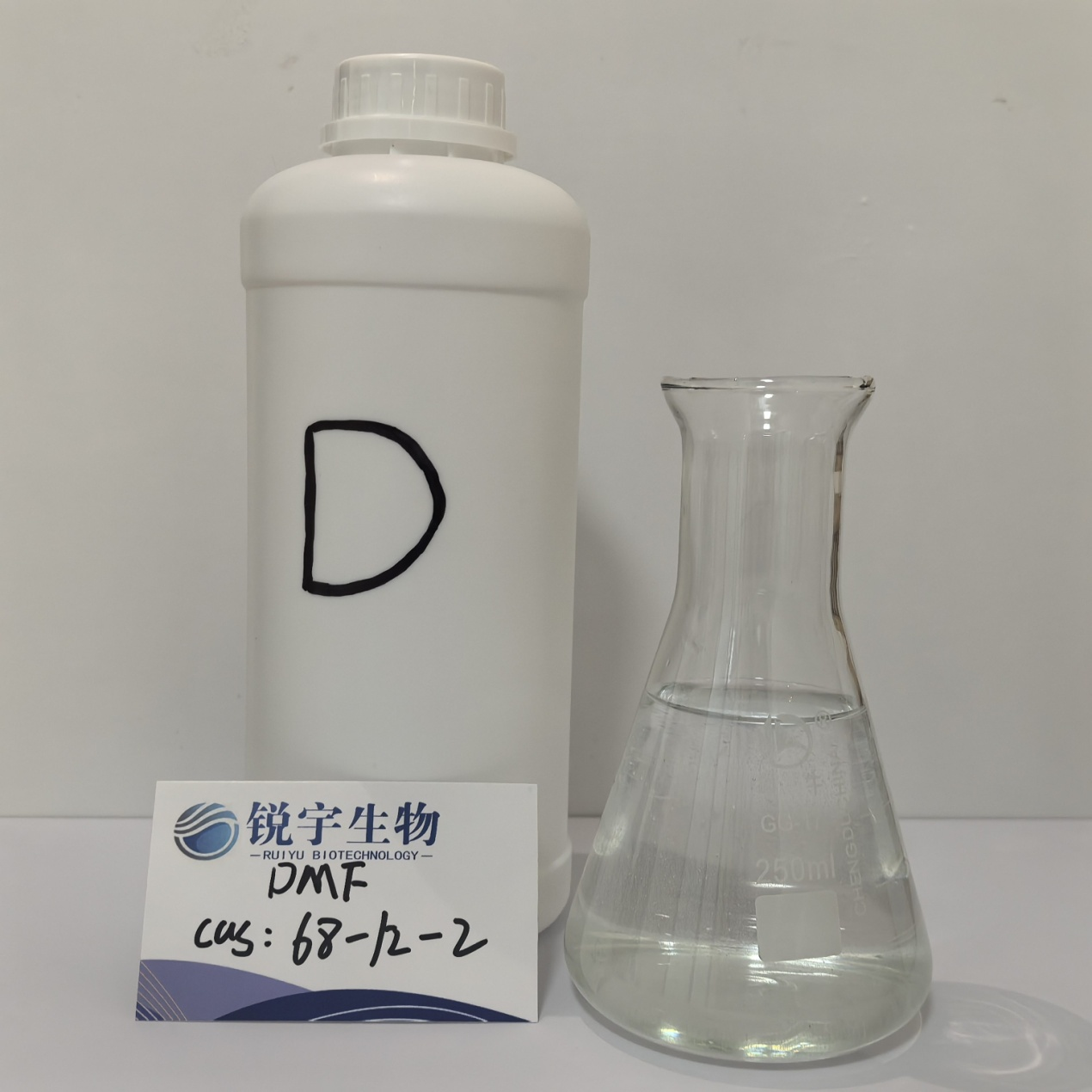
Exceptional Solvent Properties of DMF in Organic Synthesis
Polarity and High Dielectric Constant Enabling Broad Reagent Solubility
The special polarity characteristics of DMF, with a dielectric constant around 36.7 and a pretty substantial dipole moment of 3.8 D, make it capable of dissolving all sorts of different substances ranging from simple ionic salts right through to those tricky nonpolar aromatic compounds. What gives DMF this remarkable ability to mix with both polar and nonpolar materials is basically its chemical structure containing both polar carbonyl groups and those hydrophobic methyl clusters. Research indicates that when it comes to dissolving organometallic catalysts, DMF actually manages about 40% better performance compared to good old DMSO. That's why many chemists rely on DMF for important reactions such as the widely used Suzuki-Miyaura coupling process. Looking at recent findings from a 2023 study on solvent properties, there's clear evidence supporting DMF's edge over other solvents when dealing with transition metals. Take palladium acetate for instance - DMF can dissolve approximately 12 grams per liter whereas DMSO only handles about 8 grams per liter. These numbers really highlight why DMF remains so popular among synthetic chemists working with metal catalysts.
Thermal Stability and High Boiling Point Supporting Scalable Reactions
DMF has a boiling point around 153 degrees Celsius, which means it can handle reactions at higher temps between 100 and 140 degrees without evaporating away. This property is really important when trying to scale up processes like amidation or Ullmann couplings. Looking at thermal stability, DMF stands out compared to other solvents. The energy needed to break down DMF molecules is about 220 kJ per mole, way above what we see with THF at only 110 kJ per mole. That makes DMF much better suited for long reflux periods during chemical synthesis. Take polyesterification reactions as an example they often need over 72 hours at 130 degrees Celsius. After all that time, DMF stays stable about 98% of the time while acetonitrile drops down to just 63% stability according to research from Ponemon in 2023.
Comparison With Other Polar Aprotic Solvents: DMF vs. DMSO and Acetonitrile
While DMSO offers higher polarity (dielectric constant 46.7), its viscosity (1.99 cP) hampers filtration, unlike DMF's lower viscosity (0.92 cP). Acetonitrile, despite similar polarity, fails in high-temp applications (bp 82°C) and poorly stabilizes charged intermediates. A 2024 industrial solvent comparison highlights DMF's balanced profile:
| Property | DMF | DMSO | Acetonitrile |
|---|---|---|---|
| Boiling Point (°C) | 153 | 189 | 82 |
| Dielectric Constant | 36.7 | 46.7 | 37.5 |
| Viscosity (cP) | 0.92 | 1.99 | 0.34 |
| Metal Solubility | High | Medium | Low |
This versatility explains DMF's dominance in 78% of FDA-approved API syntheses (FDA Green Chemistry Report 2023).
DMF as a Reactant: Key Role in Vilsmeier-Haack Formylation and Electrophilic Chemistry
Formation of Vilsmeier reagent from DMF and POCl₃
DMF transitions from solvent to reactant in Vilsmeier-Haack formylation, reacting with phosphorus oxychloride (POCl₃) to form the electrophilic Vilsmeier reagent. This reagent comprises a chlorophosphonium ion complexed with DMF, enabling aromatic electrophilic substitution. Studies show this method achieves 80–95% yield in formylating electron-rich aromatics like pyrroles and indoles.
Mechanism of iminium ion generation and electrophilic attack on aromatics
The reaction progresses through iminium ion intermediates generated when DMF's carbonyl oxygen coordinates with POCl₃. This lowers the activation energy for electrophilic attack on aromatic substrates by stabilizing transition states.
Applications in heterocycle and aromatic compound functionalization
- Pharmaceuticals: Producing antihistamine precursors like chlorphenamine
- Agrochemicals: Synthesizing pyrethroid insecticide intermediates
- Materials Science: Functionalizing conductive polymers for OLED displays
A key limitation arises when thionyl chloride replaces POCl₃, forming carcinogenic dimethylcarbamoyl chloride as a byproduct. This side reaction contaminated 12% of batches in a 2023 safety evaluation, necessitating rigorous process controls.
DMF in Polymer and Advanced Material Synthesis
Role of DMF in Polyurethane Production and Solution Processing
The special way DMF works as a solvent makes it really important when making polyurethanes. It can dissolve both isocyanates and polyols at the same time, which keeps everything mixed properly during reactions. What sets DMF apart is its boiling point of around 153 degrees Celsius. This means manufacturers can cure materials at higher temperatures without worrying about losing solvent through evaporation, something that matters a lot when creating things like flexible elastomers or stiff foams. After the main reaction happens, DMF continues to be useful as part of the spinning process for synthetic fibers. It helps distribute polymers evenly throughout the solution before they eventually remove the solvent, which ensures better quality end products across various applications in manufacturing.
Solvent-Induced Phase Inversion for Membrane Fabrication
Membrane tech relies heavily on DMF because it mixes so well with water and materials such as polysulfone, which helps control how porous the final product becomes during phase inversion. The basic idea is simple enough: when a solution containing polymer and DMF meets water, the DMF just kind of disappears quickly, leaving behind those nice interconnected holes that make great filters. Most manufacturers use this technique these days, something like 62 percent according to industry reports. And interestingly enough, experts predict continued growth at around 8.4% per year until at least 2033, probably driven by increasing needs across various sectors from pharmaceuticals to wastewater treatment plants.
Use of DMF in Metal-Organic Framework (MOF) and ZIF-8 Synthesis
DMF serves dual roles in MOF synthesis: solvent and structure-directing agent. Its polarity stabilizes metal clusters (e.g., Zn²¯ in ZIF-8) while coordinating with organic linkers like 2-methylimidazole. For ZIF-8 crystals, DMF-modulated synthesis yields surface areas exceeding 1,600 m²/g, crucial for gas storage and catalysis applications.
Coordination Behavior with Metal Ions and Challenges in Solvent Removal
DMF binds really well to transition metals with those binding constants reaching around 10 cubed M inverse, which helps stabilize reaction intermediates but makes getting rid of the solvent after processing quite tricky. When there's leftover DMF in metal organic frameworks, it actually cuts down on porosity somewhere between 15% and 30%. That's why many labs have started using these fancy supercritical CO2 drying methods instead of traditional approaches. The manufacturing sector is seeing this too. More companies are turning to azeotropic distillation paired with toluene to knock DMF levels down under 50 parts per million, especially when working with those delicate electronic polymers where even tiny amounts can mess up performance specs. Some plants still struggle with scaling this process though, since equipment costs run pretty high for what they call "green" alternatives.
Chemical Stability and Reactivity Concerns of DMF Under Process Conditions
Degradation of DMF Under Acidic, Basic, and Thermal Conditions
The stability of DMF drops off quite a bit when exposed to really acidic environments below pH 3, basic solutions above pH 10, or temperatures pushing past 150 degrees Celsius. When things get too acidic, DMF tends to break down into dimethylamine and formic acid. On the other hand, basic conditions speed up decomposition because hydroxide ions attack the molecule. Heating DMF to around 170 degrees causes it to degrade thermally, producing dangerous stuff like carbon monoxide along with dimethylamine. That's why industrial settings need tight temperature control measures in place. What makes DMF different from solvents like acetone or ethyl acetate is that once it starts breaking down, there's no going back. This means reaction mixtures can become contaminated pretty easily if operators aren't watching closely what's happening during processing.
Formation of Dimethylamine: Implications for Product Purity and Safety
When DMF starts to break down even just a little bit, say around 2 to 5% by weight, it gives off dimethylamine or DMA for short. This stuff is pretty volatile and can really mess up drug manufacturing processes because it forms those pesky amine-adduct impurities. Now look at the safety concerns here. The LD50 value for DMA is 500 mg per kg in rats, which means it's toxic enough to require special handling. And get this, its flash point is actually minus 6 degrees Celsius, so it catches fire super easily. That's why factories need all sorts of fancy ventilation systems when working with this material. There was this big incident back in 2022 at a polymer plant where they had to shut everything down because DMA contamination knocked the tensile strength of their polyurethane product down by a full 40%. Pretty convincing reason to keep an eye on solvent purity in real time, wouldn't you agree?
Is DMF Truly Inert? Evaluating Its Role as a "Spectator" Solvent
Despite being labeled as inert, DMF gets involved in chemical reactions when certain metals like lithium or sodium are around, or when there's a strong base such as LDA present. Take Grignard reactions for instance - DMF tends to bond with magnesium during these processes, which actually slows things down quite a bit compared to using THF. Some studies show reaction rates drop anywhere from 15% to 30%. On the flip side, DMF remains completely passive in those承诺之中的特殊环境 situations, making it absolutely essential for many chemists working on those particular types of reactions. Because of this dual nature, researchers really need to look closely at how DMF behaves in each individual system instead of just assuming it won't interfere everywhere.
Frequently Asked Questions (FAQ)
What makes DMF a versatile solvent in organic synthesis?
DMF’s unique polarity and high dielectric constant make it capable of dissolving a wide range of substances, from ionic salts to nonpolar compounds. It performs significantly well with organometallic catalysts, making it crucial for important reactions like Suzuki-Miyaura coupling.
How does DMF compare with other solvents like DMSO and Acetonitrile?
DMF offers a balanced profile with a moderate dielectric constant and low viscosity. It excels in high-temperature applications and metal solubility compared to DMSO and Acetonitrile, explaining its dominance in many FDA-approved API syntheses.
Is DMF stable under all conditions?
DMF exhibits stability under neutral conditions, but it can degrade in acidic, basic, or thermal conditions. This degradation can lead to impurities that affect product purity and safety, requiring stringent process controls.
Can DMF be used in high-temperature reactions?
Yes, DMF’s high boiling point allows it to manage reactions at temperatures between 100 and 140 degrees Celsius without evaporating, making it suitable for scalable reactions like amidation or Ullmann couplings.
Are there any safety concerns related to the use of DMF?
Yes, at high temperatures or extreme pH conditions, DMF can degrade, forming dimethylamine, which is toxic and flammable. Proper safety measures and monitoring are essential in industrial applications.
Table of Contents
- Exceptional Solvent Properties of DMF in Organic Synthesis
- DMF as a Reactant: Key Role in Vilsmeier-Haack Formylation and Electrophilic Chemistry
- DMF in Polymer and Advanced Material Synthesis
- Chemical Stability and Reactivity Concerns of DMF Under Process Conditions
- Frequently Asked Questions (FAQ)